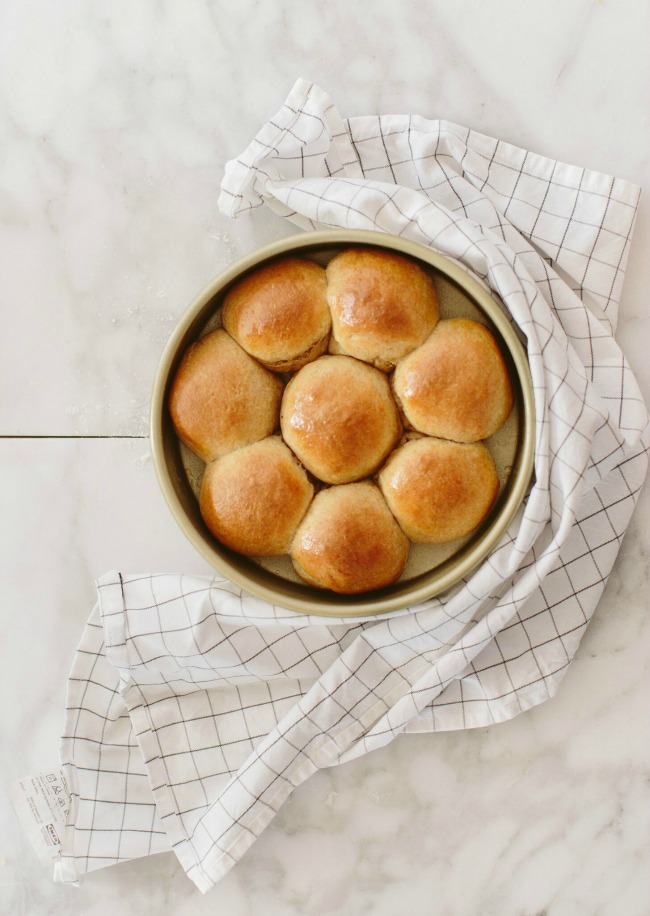
Soft pull-apart buns are a classic dinner accompaniment. Known for their tender texture and delicious taste, they are a favorite for both adults and children alike. The whole wheat version of our recipe found in Healthy Bread in Five Minutes a Day gives you a slightly healthier spin without compromising the great, buttery taste. While they are easy enough to make any night of the week, these dinner rolls can also find their way to your entertaining table.
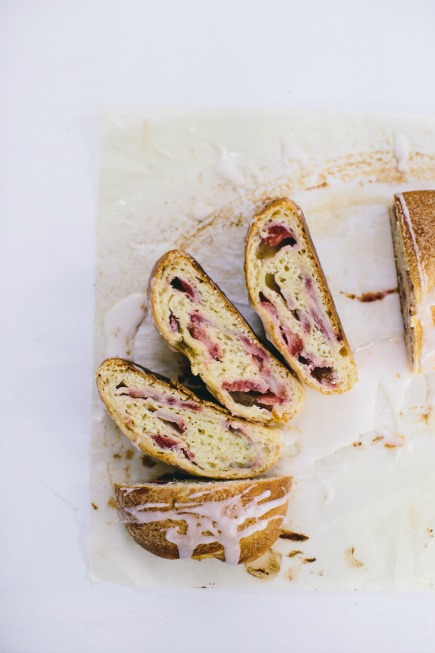
The secret of great fruit tarts and danishes? Great fruit, of course. If you have great stuff, it’s not all that complicated. Take out some stored dough, and just a little more effort gets you a great dessert. My family and some friends visited Sam Kedem Nursery Garden, near Hastings, Minnesota, where we heard they had perfect strawberries ready for picking (they’re on to raspberries now). So we are well stocked with great strawberries.
Deep dish pizza is a favorite meal around my house, but I often forget to add it to our weekday meal plan. This week, however, I was ahead of the game, and planned for deep dish pizza night. No-knead cornmeal olive oil dough makes this almost too simple, and the thick pizza slices filled with sausage and cheese meant one piece each was enough for all of us. Of course, it’s been requested again, and next week I think I’ll stuff it full of onions, green pepper, and mushrooms, for a vegetarian take.
In 2009 I was in Pittsburgh just before SuperBowl (go Steelers!) and mixed up a batch of Master Recipedough with host Jon Burnett on KDKA-TV Channel 2 (the CBS affiliate). Pittsburgh was awash in Steelers mania, and I couldn’t resist cutting a loaf of Pain d’Epi (wheat stalk bread) but calling it Pain du Football (page 75 in the book). I’m bringing this bread to a Super Bowl party because each individual roll is shaped like a football– well, something like a football. Perfect for dipping into chili in front of the game. Jon was disappointed that my baked bread was a bit stale (I’d had to bake it in Minneapolis and it was two days stale!) so he insisted on eating the RAW bread dough instead. Click here or on the video screen above to view theTV segment, this was great fun.
Have a look at this post on Pain d’Epi(wheat stalk bread) for some nice shots of the cutting technique. Remember to cut at a very shallow angle with long-bladed shears, almost all the way through the baguette you form.
Note: BreadIn5.com is reader supported. When you buy through links on the site, BreadIn5 LLC earns commissions.
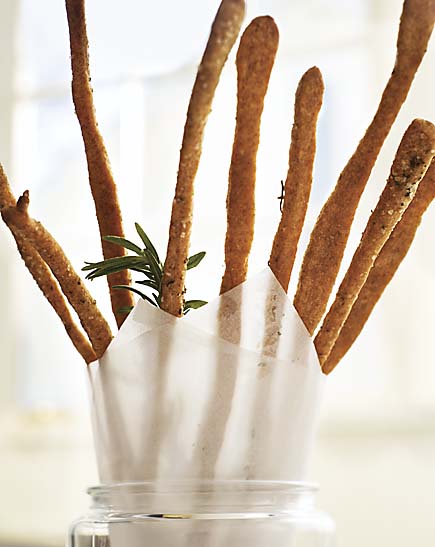
Bread sticks are among the easiest and fastest things we bake, because you roll out a thin sheet, cut the sticks with a pizza cutter, and then it’s into oven, with no resting time needed– they go into the oven as soon as they’re cut! More on these beauties in The New Healthy Bread in Five Minutes a Day (2016), on page 293.
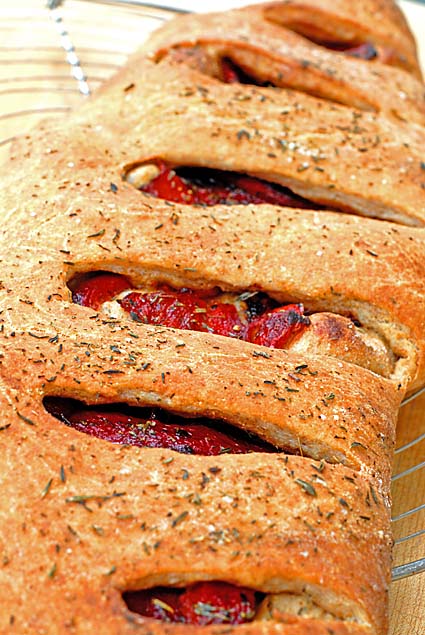
… …and I’m having trouble finding time to finish editing the video. Zoe and I have two more busy weeks of last-minute editing for our pizza and flatbread book (which will be out in October of 2011). I’ll get the new video up here as soon as possible (on how to get steam into your oven), but meanwhile here’s a re-print of an old post– on roasted red pepper fougasse– a gorgeous stuffed flatbread from France, which looks ahead to next year when we’ll be talking about flatbread all the time. Read More
The rye flour available in supermarkets is delicious, but it’s whole-grain, and that’s not what I grew up with as a kid. Those rye breads from yesteryear were made from “medium” rye (bran and germ-depleted), and the result was lighter. Bob’s Red Mill and Hodgson Mills rye flours make great breads, but you have to go light with them to re-create what we used to get years ago.
I figured that wasn’t what people were looking for in the books, so I went a little heavier in the recipes we published in Artisan Bread in Five Minutes a Day, and of course, with much more whole grain in Healthy Bread in Five Minutes a Day. In this video, I’m talking about using relatively little of the Bob’s or the Hodgson product. Follow the recipe at our Back to Basics post, but substitute 1/2 cup of rye flour (Bob’s or Hodgson Mills) for 1/2 cup of unbleached all-purpose (in the book, the swap is for a full cup). Then, add 1 1/2 tablespoons caraway seeds to the initial mix. Everything else is the same (in Artisan Bread in Five, I used a whole cup of rye flour, and it’s also a great result– just different).
To clarify a couple of things from the video: I said to turn and shape the loaf pulling around on three sides– I meant “on four sides;” turn the loaf in quadrants and pull the top around to the bottom to create a “cloak.” And of course, rest the loaf on on cornmeal or parchment, not on the board where you shaped it or you’d have to lift the fully proofed loaf, which isn’t a good idea.
20 to 30 minutes before baking time, preheat a baking stone to 450 degrees F (230 degrees C), with a metal broiler tray on any other shelf that won’t interfere with rising bread (do not use glass for this purpose or it will shatter). Using a pastry brush, paint the loaf with water and sprinkle with more caraway seeds.
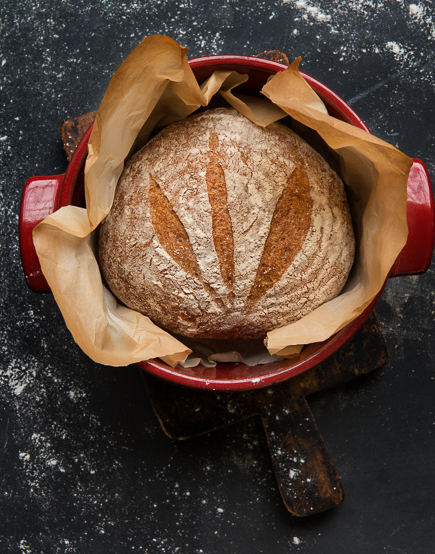
Slash at least 1/2-inch deep with a serrated bread knife, making perpendicular, not angled cuts, as in the video. Slide loaf onto the baking stone and pour 1 cup of hot water into the broiler tray and close the oven door. Bake for about 30 minutes or until golden brown.
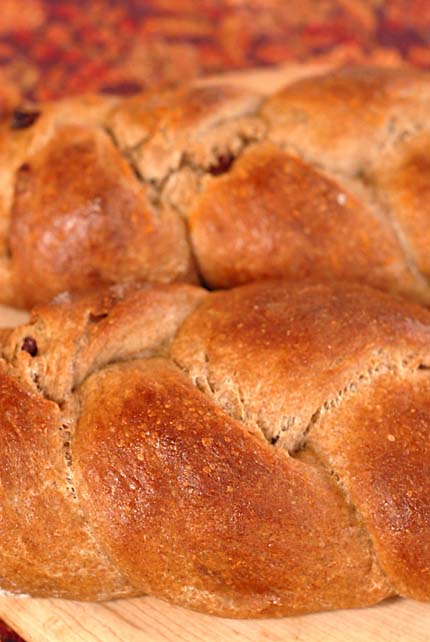
Our new bookhas a terrific braided challah with whole wheat and wheat germ, and I’ve been playing with a variation that includes cranberries and orange zest. This same challah recipe lends itself to many other holiday traditions as well, forming the basis in our book for Scandinavian Christmas breads like Pulla and Julekage. It’s really just a lightly enriched yeast dough that is very, very versatile. The recipe… Read More
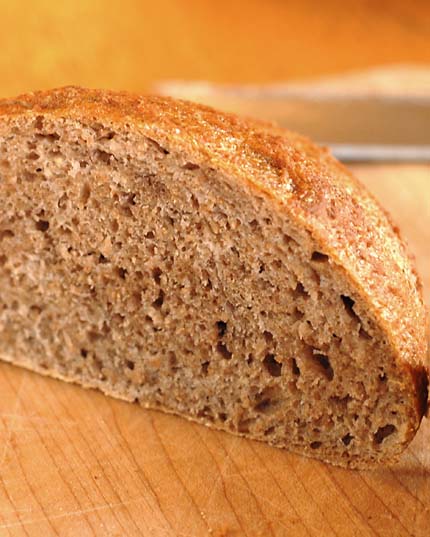
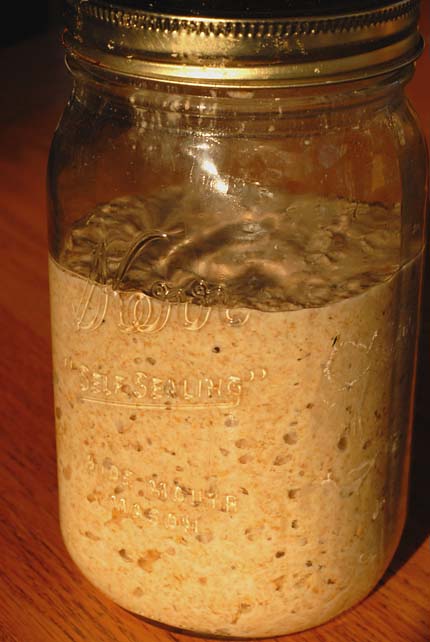
Back on November 11, I posted about my experiences with fresh-ground whole wheat, and I promised I’d come back and let you know how the dough stored. Short answer: pretty well. I baked off some of the dough on day 10 of the batch-life, and it did beautifully. Here, pictured above, is the same batch on day 15, which is a day longer than we usually recommend. I had a feeling that it was going to be OK when I took the jar out of the fridge (remember, don’t screw the top down if you store dough in jars– gas is still being produced and this could cause a hazard). You can still see some decent hole structure:
So, I’m liking this fresh-ground wheat. Very curious as to all your experiences with it.